
The move does not start on moving day. In practice, the handover of the apartment, boxes, helpers, authorities, parking and insurance all happen at the same time on the same date. Anyone who decides on the day of the move which furniture will come with them, which cupboard will be dismantled or who will receive the key often pays in waiting time, stress and avoidable additional expenses.
ThisMoving To Do Listorganizes the preparation into eight chronological phases. You can print out the points, check off completed tasks and collect confirmations, photos, contracts and receipts in a folder. TIXPI can be planned early if you want to organize a complete relocation, the transport of individual furniture, disposal or optional assembly.
In Switzerland, around697,000 peoplemoved. That corresponded to9.3% of the resident population, at the same time the rate was at the lowest level in over ten years and remained unchanged compared to 2023, as theBundesamt für Statistikshows. Frequency does not automatically make moving easy. It remains crucial to sort tasks in a timely manner, honestly assess the scope and confirm critical dates in writing.
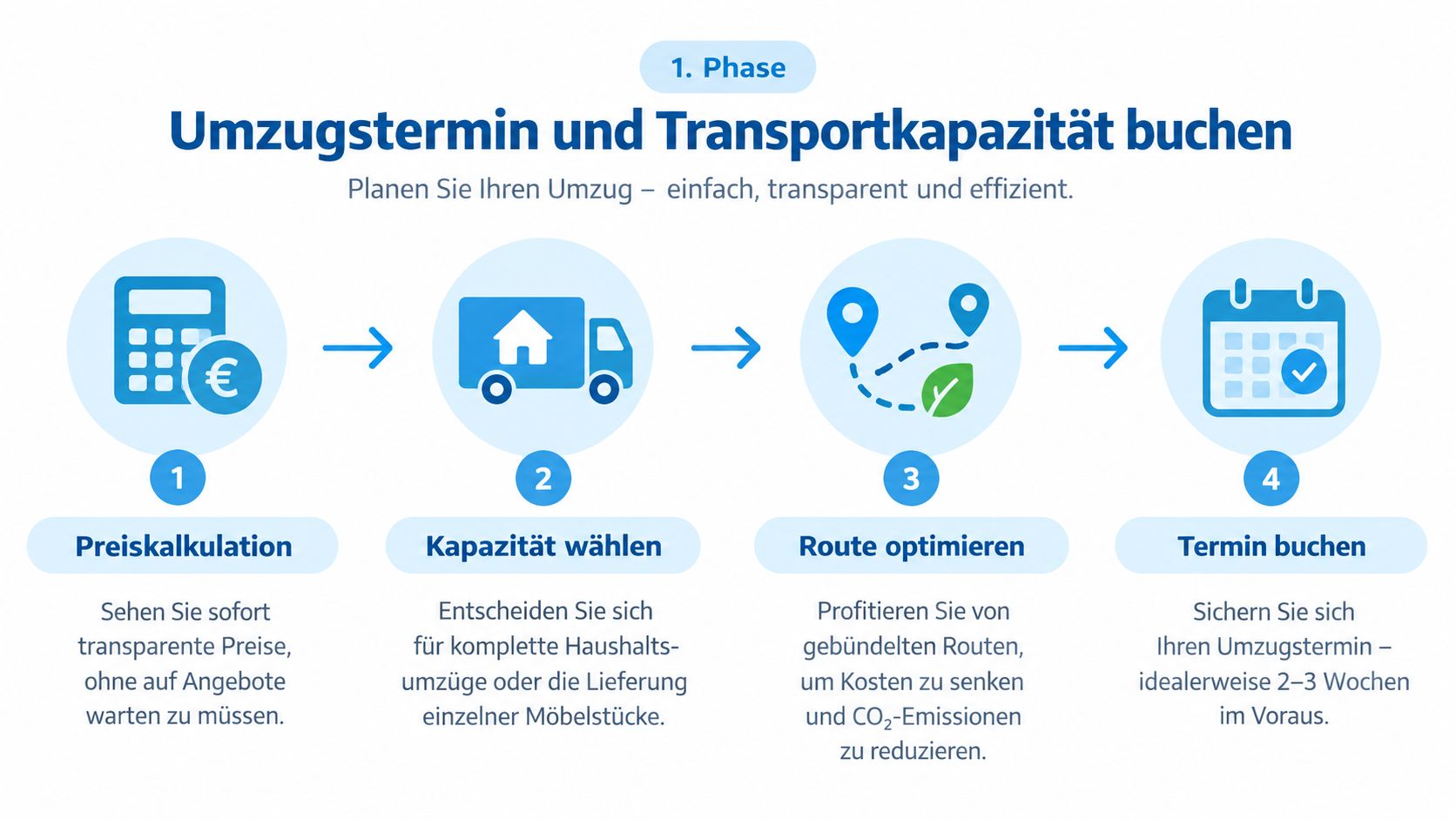
1. Book the moving date and transport capacity
The first fixed date is not packing, but the transport booking. First determine whether a complete household, individual pieces of furniture or additional assembly and disposal should be transported. A family with a four-room household needs different crew and vehicle planning than an individual who only has a sofa or a cupboard brought into the new apartment.
At TIXPI you see the price calculation directly and don't have to wait for multiple offers. This makes budget planning easier, but does not replace an honest assessment of the moving quantity. Too little capacity booked leads to additional bookings or delays. If the planned capacity is too large, it can cause unnecessary costs.
Appointment, route and scope of service
Book the desired appointment as early as possible, ideally at least two to three weeks in advance. This leaves more choice when it comes to time slots and crew. Check whether your transport can be combined with a suitable route. Consolidated transports can improve utilization and reduce unnecessary empty trips.
A crew rental service can be useful for self-organized relocation with professional support. They then take on certain preliminary tasks while the crew carries out difficult or risky tasks. If you want to coordinate as little as possible yourself, book the more comprehensive organization from collection to delivery.
Practical rule:Don't just book a vehicle. Book a clearly defined scope of services with access, floor, assembly, disposal and desired time slot.
Read the information onoffiziellen Zügelterminen in der Schweizbefore choosing a date. The scheduling logic is similar to the planning ofoptimierten Routen für Handwerker: The earlier addresses, time slots and requirements are determined, the less the scheduling improvises.
2. Document inventory and moving quantity
A room-by-room inventory list creates the basis for packing planning, transport capacity and damage control. Capture furniture, electrical appliances, boxes, delicate items and anything with special effort. Write specific entries such as sofa, sideboard, lamps, plants and packed boxes instead of just “living room”.
Take photos of larger or valuable items before packing. The images document the condition and show the crew which parts need to be treated with particular care. An office also includes IT equipment, workstations, shelves and accessories. Organize them by department or location.
The list must make decisions visible
Label each entry with a decision: take it with you, sell it, donate it, or throw it away. This makes it clear early on what quantity is actually being transported. At the same time, a packing plan is created. Kitchen utensils, documents and fragile decorations need different labels and priorities.
Start documentation at least two weeks before move-in day. There is enough space, content and priority for boxes. For furniture, add disassembly, approximate weight, delicate surfaces and possible access issues.
- Assign space:Each item is given a clear target space.
- Record condition:Photograph scratches and existing damage.
- Mark priority:Separate items for the first night mark.
- Note down special cases:Highlight glass, heavy equipment, bulky furniture and sensitive technology.
TheTIXPI-Ratgeber zur benötigten Kartonmenge offers practical orientation. The actual amount depends on the household. Plan transportation based on the list, not from memory. For sales, note the sales price, pickup date and payment status. This keeps your financial planning clean. If you want to keep a household book, you will find thebeste Methoden fürs Haushaltsbuch.

3. Prepare the apartment and clarify handover dates
Both apartments must be accessible before the move-in day. Clarify with the property management when the old apartment can be vacated and the new one can be entered. Also ask about lift reservations, parking, loading zones and possible fees. In the case of narrow doors, stairs or courtyards, accessibility determines whether large furniture can reach the target room directly.
If possible, obtain this information at least four weeks in advance. Check door widths, staircases, railings and the available space for the transport vehicle. When relocating an office, facility management, access cards and internal transport routes belong to the same coordination.
Confirm accesses in writing
Have reservations and responsibilities confirmed in writing. This includes the lift, required protective materials and any permission for parking or signaling. Inform the neighborhood in good time. Free access reduces waiting times and prevents furniture from being left unnecessarily outside or in the hallway.
Inspect both apartments again before transport. Note these points:
- Entrance and doors:Does the largest furniture fit in width and height?
- Stairs and elevator:Are there tight curves, sensitive walls or a weight limit?
- Parking:How close can the vehicle be to the loading zone standing?
- Keys and access:Who opens the old and the new apartment, and at what time?
- Condition:Are floors, walls and doors photographed before moving in?
TheCheckliste zur Wohnungsübergabesupports the formal coordination. Agree with the administration who will document protective measures, damage and the handover of keys. A written confirmation prevents misunderstandings on the day of the move and makes later handover documentation easier.
4. Clear out items and plan furniture disposal
Any piece of furniture that doesn't come with you doesn't have to be packed, carried and transported. Start decluttering six to eight weeks before the move. This distance allows time for sales, donations and organized disposal. Those who sort things out the evening before usually decide under time pressure and end up paying for things that don't belong in the new apartment.
The three-box method works simply: keep, sell, dispose of. You can also have a donation category for larger furniture. Intact items can be offered, for example, via Ricardo, Anibis or Facebook Marketplace. Suitable donations in kind can go to Caritas, the Red Cross or the Salvation Army.
Sale, donation or disposal
Sales offers require realistic pickup times. A buyer who can't pick up until weeks later is blocking the move. Note the sales price, pickup date and payment status. This keeps your financial planning clean and prevents sold furniture from accidentally ending up in transit.
Bulky items shouldn't just be left in the stairwell or in front of the house. Clarify local disposal regulations and plan collection to coincide with the moving day. TIXPI also offers a furniture disposal service. This can be useful if heavy cupboards, sofas or other parts have to be professionally removed from the apartment.

“Anything that doesn't come with you doesn't belong on the transport list.”
The ecological advantage lies not only in less waste. A smaller load can simplify route planning and avoid unnecessary transport. But don't be quick to throw away things that you need in your new apartment. Compare space, dimensions and replacement costs before giving away high-quality furniture.
5. Secure insurance and liability
Clarify insurance coverage before the first box is in the van. Check whether your household contents insurance covers the move and what damage is covered. Ask TIXPI about insurance options, liability limits and exclusions. Write down in writing who is responsible in the event of transport damage, loss or existing defects.
An inventory list makes it easier to determine the value of household goods.Swiss Life beschreibt die Ermittlung des Versicherungswertsbased on individual items and their insurance or new value. The categories simple, medium and high quality are used for an initial assessment. Children up to 14 years old count as half people in this model.
Document before loading
Take photos of valuable furniture, equipment and sensitive items before collecting them. Save purchase receipts, serial numbers, and images of existing damage along with the inventory list. For art, collections or sensitive office equipment, you should clarify whether standard protection is sufficient or separate cover is necessary.
Check the terms and conditions of the moving service before booking. Pay particular attention to reporting deadlines, packaging requirements and exclusions for items you have packed yourself.
- Record the condition:Photograph furniture and equipment before transport.
- Clarify liability:Have the scope of services, deductibles and exclusions confirmed in writing.
- Report special goods:Art, glass, technology and particularly heavy objects in advance specify.
- Secure damage:Document photos, description and affected item immediately.
The household contents insurance may request a detailed inventory list. The contractual conditions of the insurer and the transport company also apply to the move. Check these specifications instead of relying on general assumptions.
6. Organize address changes and notifications
Six weeks before the move, create a recipient list. Capture government agencies, financial institutions, insurance companies, employers, subscriptions, delivery services and private contacts. Mark which offices require confirmation or additional documents.
When moving within Switzerland, deregistering from the previous location and registering at the new municipality are part of the appointment list. The city of Zurich points out that online registration is only possible 30 days before moving in. In many municipalities, the change of address must take place within14 daysafter the move or change of address, as theStadt Zürich zu Umzügenexplains.
Treat canton changes separately
Change canton, also check license plates, road traffic office, insurance and permits. For the change of address at the road traffic office, there is also a deadline of14 days, as theStadt St. Gallen zu Meldepflichten beim Umzugexplains.
Work through the list according to urgency:
- Authorities:Municipality, canton and, if applicable, road traffic office.
- Finance:Banks, Credit card providers and tax offices.
- Insurance:Household contents, liability, vehicle and other policies.
- Supply:Electricity, Internet, telephone and other supply contracts.
- Everyday life:Employers, schools, doctors, newspapers and Delivery services.
A postal forwarding order catches forgotten senders, but does not replace direct notification. Save confirmations from important bodies as a PDF or screenshot and note the reporting date. After moving in, check whether mail continues to arrive at the old address.
7. Set up your first apartment and use the assembly service
On the day you move in, the basic function of the apartment is what counts first. Mark a zone for bed, lights, bathroom supplies, medications, chargers, and small essentials. This way, these things remain accessible, even if boxes and furniture have not yet been distributed.
Before transport, determine which rooms must be usable first. For the bed, large closet and complex shelving system, check whether doors, stairs and storage areas fit. A lack of instructions, screws or special tools can significantly lengthen the assembly process.
Decide on installation according to effort
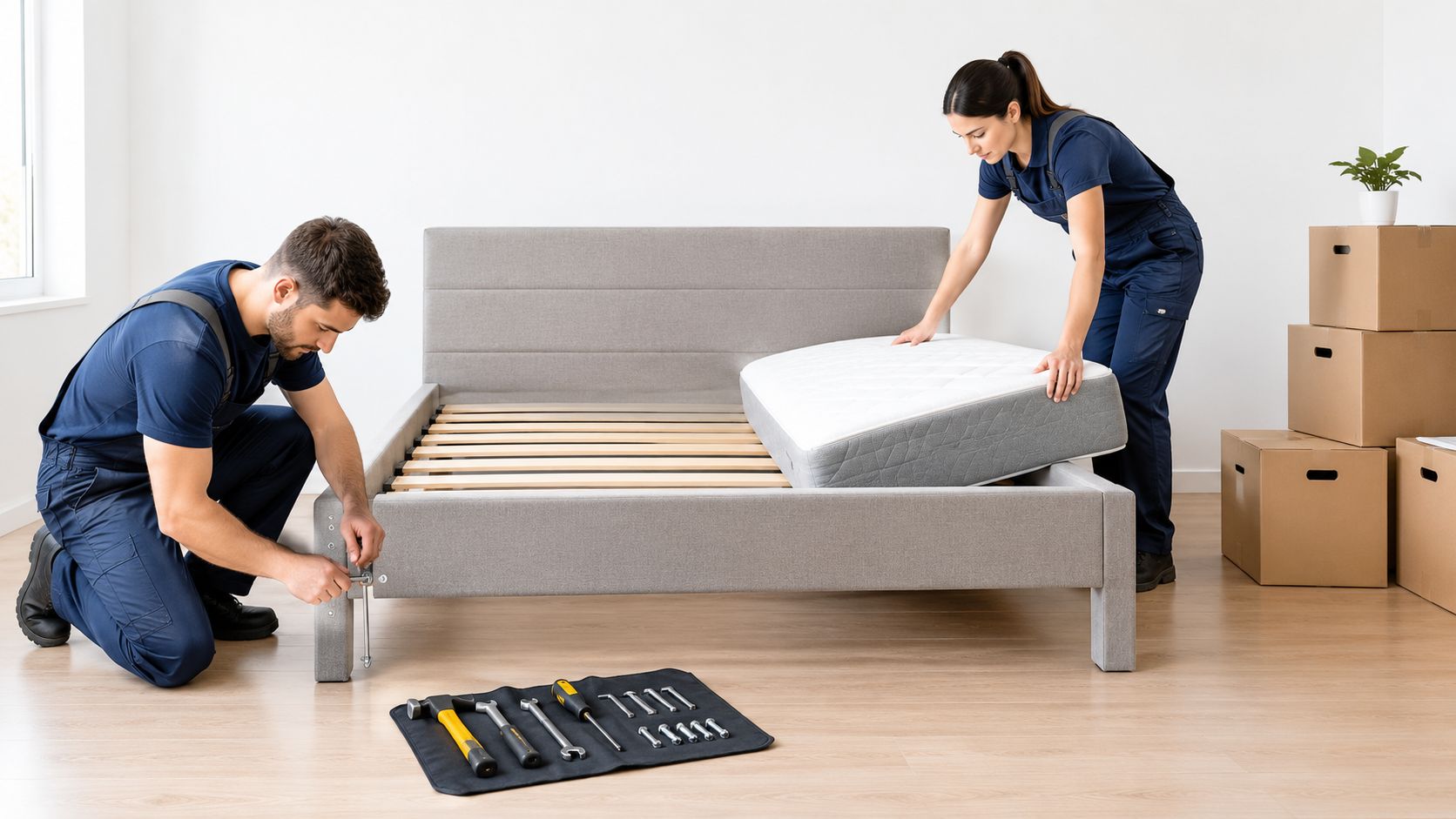
Self-assembly saves service costs, but requires time, tools and physical strength. For beds, cupboards, heavy shelves and office furniture, professional support can take the stress out of moving day. TIXPI offers optional assembly on site so that transport and assembly can be coordinated.
Book assembly before transport if several large pieces of furniture need to be assembled. If there are just a few, simple parts, a later assembly is often sufficient. The free area should be clean and level. Provide instructions, hardware and special tools. In the office, there are cables, screens, docking stations and the allocation of workstations.
Four points should be clarified for each piece of furniture:
- Mark the position:Determine the location and opening direction before assembly.
- Small parts secure:Store screws and fittings in labeled bags.
- Test functions:Check drawers, sliding doors, hinges and height-adjustable parts.
- Separate time:Postpone assembly to a later date if the process is tight.
It is only after the furniture has been positioned that it becomes clear whether paths remain clear and doors open completely. This also applies if you plan theSichtschutz für den Balkon. Lamps and additional storage can then be placed more specifically.
8. Carry out broker inspection and handover documentation
The old apartment is only complete when the condition, keys and open points are documented. Clean the rooms according to the rental agreement and remove personal items from the basement, attic, mailbox and adjoining rooms. Arrange the joint inspection with the landlord or property management company and allow enough time for questions.
Take photos of all rooms in good lighting. Record floors, walls, doors, windows, sanitary objects, fixtures and meter readings. A short video tour can supplement the room sequence, but does not replace easy-to-read detailed images.
Complete the handover protocol completely
Compare the condition with the move-in protocol. Already known signs of use should not appear again as new damage. Describe new defects specifically, ideally with position, extent and photo. A protocol with general phrases such as “apartment in order” is less protective than precise room-by-room documentation.
Have the handover protocol signed by the parties involved and keep a copy. The documentation also includes the number of keys, meter readings, returned devices and any agreements regarding repairs.
A clean handover not only protects the deposit. It creates a common, comprehensible status for both sides.
Keep photos, minutes, emails and relevant documents for at least five years. This is particularly important if the deposit statement raises questions later. The Swiss rental deposit is legally limited to a maximum of three months' rent, is usually due before moving in and must be kept in a blocked account. According to theFAQ zur Mietkaution von SwissCautiona transfer to the new apartment is not possible, even not necessarily in the same building. Therefore, plan repayment and new deposit as separate processes.
8-point comparison: moving to-do list
| 🔄 Implementation complexity | ⚡ Resource requirements | 📊 Expected results | ⭐ Ideal Use cases | 💡 Important advantages / tips |
|---|---|---|---|---|
| Book moving date & transport capacity, online booking, scheduling necessary | Low–medium: information on quantity, choice of date; note regional availability | Transparent price forecast; possible CO2 and cost savings through consolidation | ⭐⭐⭐ Complete packages, urban moves, individual furniture deliveries | 💡 Use immediate prices; Book 2-3 weeks in advance; Check route optimization |
| Document inventory & moving quantity, detailed inventory required | Medium: time for photographs, lists; digital or paper administration | More precise cost calculation; better insurance claims; lower risk of damage | ⭐⭐⭐ Large households, insurance coverage, office moves | 💡 Photos with date; group by room; Create a list at least 2 weeks in advance |
| Prepare the apartment & clarify handover dates, coordinate with the landlord/management | Means: communication, parking space/elevator reservation, access check | Less delays; better use of resources on moving day | ⭐⭐ Apartment buildings, large transports, office relocations | 💡 Contact property management 4 weeks in advance; secure parks/elevators; Document condition |
| Cleaning out items & planning disposal, systematic sorting and coordination | Medium–High: time required; possible disposal fees; Organize sales/donations | Reduced transport costs; Sustainability; possible income from sales | ⭐⭐⭐ high volume households; Cost and CO2 reduction aimed for | 💡 Start 6-8 weeks in advance; 3 box method; Use TIXPI disposal |
| Insure insurance & liability, check policies and add to them if necessary | Low–Medium: Documentation, possibly additional policies (costs) | Financial protection in the event of damage/loss; clear liability regulations | ⭐⭐⭐ Moves with valuable furniture, art, IT equipment | 💡 Check household contents insurance for 4 weeks; Provide receipts/photos; Read terms and conditions |
| Organizing address changes & notifications, variety of administrative steps | Means: time for forms, online updates, going through contacts | Avoiding lost mail; Continuation of contracts/services | ⭐⭐ Families, subscriptions, companies with many contacts | 💡 List 6 weeks in advance; set priorities; Forwarding order 3–12 months |
| Set up your first apartment & use assembly service, coordination of assembly work | Medium: Additional service costs; Appointment required | Faster, cleaner setup; professional assembly quality | ⭐⭐⭐ Complex furniture sets, little DIY time, families | 💡 Determine positioning in advance; Have assembly instructions and screws ready |
| Conduct broker inspection & handover documentation, thorough photo documentation & protocol | Low–medium: photos, video, joint inspection | Protection of the deposit; legal protection; Proof of damage | ⭐⭐⭐ Rental apartments, security deposit, dispute prevention | 💡 Photos/video walkthrough; sign a joint protocol; Keep copies for 5 years |
Arrive relaxed with a system
The final check should not consist of a general feeling, but of a few verifiable points. Confirm appointment, access, key collection and access to both apartments. Compare the actual inventory list with the booking and flag items that require special treatment, assembly or disposal.
Then check the documentation. Photos of valuable furniture, meter readings, handover protocols and damage reports belong in a common storage location. If there is no evidence, it will be more difficult to clarify later questions about the condition, liability or deposit. Digital folders with clear file names are more practical than loose images on multiple cell phones.
The community registration should be completed with the authorities. After changing cantons, you should also check license plates, the road traffic office, insurance and possible permits. Address changes with banks, insurance companies, employers, subscriptions and delivery services will also be checked off as soon as the respective confirmation is received.
You hand over the old apartment clean, empty and with complete keys. Record the condition in good lighting and compare it with the move-in report. In the new apartment, before assembly, check whether furniture fits in the intended space and whether paths, doors, drawers and sliding doors function freely.
The financial side should also be completed. Take into account transport, packaging, assembly, disposal, cleaning, parking or permit costs as well as the separate planning of old and new rental deposits. An immediate price calculation can reveal the upper limit for the booked TIXPI service. You should confirm additional services before the appointment, not just while wearing them.
TIXPI is particularly suitable if you want to combine a transparent fixed price, an organized crew, furniture transport, disposal or optional assembly with less personal coordination. Depending on the order, the platform takes care of planning through to delivery and can combine individual transports with suitable routes. If you want to work yourself, you can choose the scope of support accordingly.
A good oneMoving To Do Listdoesn't make every decision for you. It ensures that the important decisions are made in good time, before the vehicle, crew and keys are waiting for each other on the same day.
If you would like to organize your move, individual furniture transport, disposal or optional assembly with transparent price calculation, checkTIXPI. Enter the relevant key data early, compare the scope of services required and plan the transport to suit your personal moving list.